
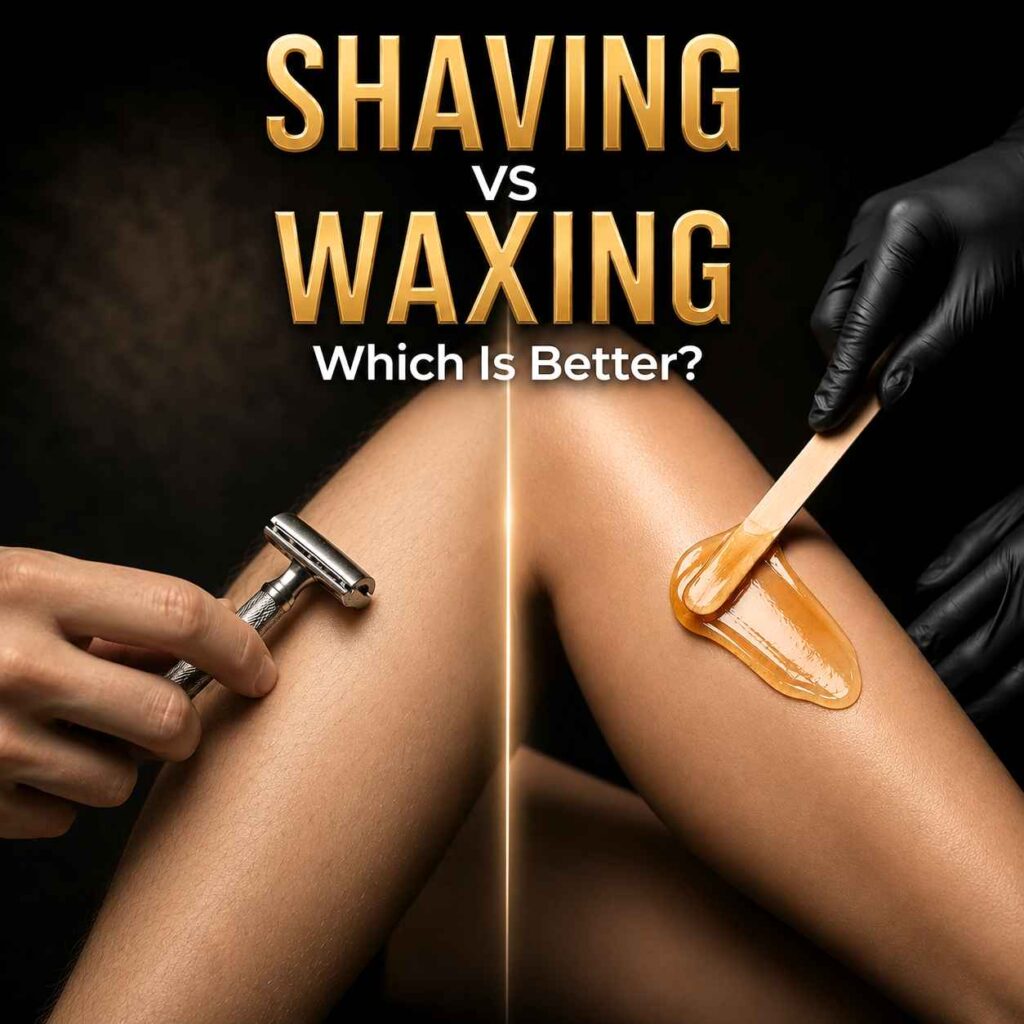
Shaving cuts hair at the skin surface; waxing pulls hair from the follicle. Shaving suits quick upkeep, while waxing requires enough regrowth for the wax to grip. The better choice depends on the area, your skin and the products or medicines you use—not a promise of identical results for everyone.
The better option depends on several factors, including the area you want to treat, your skin sensitivity, budget, schedule, and personal comfort.
At Vidao Nails and Day Spa in Houston, we offer professional waxing services and help clients choose an approach that fits their needs. If you are comparing shaving vs. waxing, understanding how each method works can make the decision much easier.
What Is the Difference Between Shaving and Waxing?
The main difference is where the hair is removed.
Shaving cuts visible hair at or near the surface of the skin. Waxing removes hair from the root, which generally means it takes longer for visible regrowth to appear.
Both methods have advantages and potential drawbacks, so there is no single option that is best for everyone.
1. How Does Shaving Work?
Shaving uses a razor to cut hair at the skin’s surface while leaving the hair follicle beneath the skin intact.
It is quick, widely accessible, and easy to do at home. For many people, shaving is a convenient choice for regular maintenance, especially when they want immediate results without scheduling an appointment.
Because the hair is cut rather than removed from the root, visible regrowth may appear relatively quickly. How soon this happens varies depending on the individual and the area being shaved.
2. How Does Waxing Work?
Waxing removes hair from the root by applying wax to the skin and removing it along with the hair.
Because the entire hair is removed from the follicle, the skin may remain smooth for longer than it typically does after shaving. The exact length of time varies based on individual hair growth cycles, the treatment area, and how consistently waxing is performed.
Professional waxing can also provide more controlled application and removal, particularly in areas that may be difficult to treat at home.
3. Which Lasts Longer: Shaving or Waxing?
Shaving Results
Because shaving removes hair only at the surface, regrowth can become noticeable relatively quickly. Some people shave frequently, while others can wait longer between sessions.
Your individual hair growth rate, hair texture, and treatment area all influence how often shaving is needed.
Waxing Results
Waxing generally offers longer-lasting smoothness because the hair is removed from the root.
Many people enjoy having more time between hair removal sessions. However, some regrowth is usually needed before the next waxing appointment so the wax can effectively grip the hair.
For clients who prefer less frequent maintenance, waxing may be the more convenient option.
4. Which gives the finish you prefer?
Both methods can leave the area feeling smooth immediately afterward. Regrowth, hair texture and skin response vary. Waxing should not be chosen as an exfoliating treatment: lifting or damaging skin is an unwanted effect, not a benefit.
5. Which Is More Comfortable?
Shaving: Usually Quick and Comfortable
For many people, shaving is relatively comfortable when performed carefully with a clean, sharp razor and appropriate shaving products.
However, irritation, razor burn, small cuts, or ingrown hairs can occur—especially when shaving dry skin, using a dull blade, or repeatedly going over the same area.
Proper technique and gentle aftercare can help reduce irritation.
Waxing: Brief Discomfort with Longer-Lasting Results
Waxing can cause temporary discomfort because the hair is removed from the root. The level of discomfort varies from person to person and can also depend on the treatment area.
Sensitive areas may feel more uncomfortable than larger areas such as the legs. Working with an experienced waxing professional can help make the process more efficient and comfortable.
Temporary redness or sensitivity may occur after waxing and often improves with appropriate aftercare.
6. Which Is More Convenient?
Shaving: Easy for Last-Minute Hair Removal
Shaving can be done at home whenever needed, making it convenient for quick touch-ups or last-minute plans.
There is no need to wait for an appointment, and the initial cost of basic shaving supplies is generally low.
The trade-off is frequency. Because the results are usually shorter-lived, shaving may need to become a regular part of your routine.
Waxing: Less Frequent Maintenance
Professional waxing requires an appointment and generally costs more per session than basic shaving supplies.
However, because the results typically last longer, many people appreciate not having to think about hair removal as frequently.
For those who value longer intervals between maintenance, waxing may fit more naturally into their lifestyle.
7. What Are the Common Skin Concerns?
Possible Shaving Concerns
Shaving may sometimes contribute to:
- Razor burn
- Temporary redness or irritation
- Small cuts
- Dryness
- Ingrown hairs
Using a clean, sharp razor, adequate lubrication, and gentle technique may help reduce these concerns.
Possible Waxing Concerns
Waxing may sometimes cause:
- Temporary redness
- Sensitivity
- Small bumps
- Ingrown hairs
- Temporary skin irritation
Following appropriate pre- and post-waxing care can help support a more comfortable experience.
Certain skincare products, medications, or skin conditions may make waxing unsuitable for some people or some treatment areas. If you are unsure, speak with a qualified professional before your appointment.
8. Shaving vs. Waxing for Different Areas
Legs
Both shaving and waxing are popular options for the legs.
Shaving is convenient for quick maintenance, while waxing may appeal to those who prefer longer-lasting smoothness and fewer hair removal sessions.
Underarms
Underarms can be shaved or waxed depending on your preference.
Shaving is fast and easy to maintain at home. Waxing removes hair from the root and may provide a longer interval before visible regrowth appears.
Because underarm skin can be sensitive, proper technique and aftercare are important with either method.
Bikini Area
The bikini area can be particularly sensitive, and both shaving and waxing may cause temporary irritation for some people.
Shaving offers convenience and privacy at home, while professional waxing may provide longer-lasting results and precise hair removal.
If you choose waxing for the bikini area, working with an experienced professional can help ensure the service is performed carefully and hygienically.
Face
Facial hair removal requires special attention because facial skin can be sensitive.
Waxing may be used for areas such as the eyebrows, upper lip, or chin when appropriate. Shaving is also a personal grooming option for some people.
The best method depends on your skin, hair, preferences, and any skincare products or treatments you currently use.
9. Is Waxing Better Than Shaving?
Neither method is universally better. The right choice depends on what matters most to you.
Shaving may be a good fit if you prefer:
- Quick hair removal at home
- Lower upfront cost
- Minimal temporary discomfort
- Easy last-minute maintenance
Waxing may be a good fit if you prefer:
- Longer-lasting smoothness
- Less frequent hair removal
- Professional service
- Hair removal from the root
Many people also combine both methods, choosing different approaches for different areas of the body.
How Do You Choose the Right Hair Removal Method?
Consider your skin sensitivity, lifestyle, budget, maintenance preferences, and the area you want to treat.
If you are new to waxing, a professional consultation can help you understand what to expect before, during, and after your service. Your technician can also provide aftercare recommendations based on the treatment area.
Ultimately, the best hair removal method is the one that feels comfortable, practical, and sustainable for your routine.
Before you reserve waxing in Houston
Tell the provider about retinol, prescription retinoids, recent skin treatments and any irritation on the area. The American Academy of Dermatology advises against waxing sunburned or very sensitive skin, and against waxing after isotretinoin use within the previous six months. Check medication questions with your prescriber; do not stop prescribed treatment on salon advice.
Confirm the exact area, preparation instructions and menu price before booking. Our waxing preparation guide covers questions to bring to the appointment. If your skin is irritated, postponing hair removal can be the appropriate choice.
Further reading: American Academy of Dermatology — waxing precautions.
Plan your visit in Houston 77015
Explore our facial and body waxing and current service menu before your appointment. Vidao Nails and Day Spa is at 14620 Woodforest Blvd, Houston, TX 77015. Call (713) 451-9553 or book online to plan your visit.